If you are a painting contractor, you have heard the pitch.
More leads. Better rankings. A full schedule by spring.
Maybe you even signed. Then six months later you were staring at a report full of numbers that had nothing to do with booked jobs.
We run a marketing agency. What follows is the honest version of what you are signing up for.
That is not a trick. It is the fastest way to figure out whether you should hire us, hire someone else, or run your marketing yourself for another year.
None of these seven are reasons to avoid an agency.
They are what should shape your decision.
For each one, you get how to spot the problem before you sign and the questions to ask.
Why an Agency Is Writing This
Most agency websites only show the wins: The 400% traffic increase, or the screenshots of a phone blowing up.
Nobody publishes the part where a contractor pays for eight months, and then quits right before the work starts to compound.
Here’s the thing: You are going to find out about these seven pain points either way. You can find out now, for free. Or you find out later, after you have spent $30,000.
I would rather you find out now. A bad fit costs us more than a lost sale.
One more thing worth saying before we get in the weeds…
The problem is rarely the fault of one party. Instead, it is the belief that marketing is something you can pay to make go away.
Every item below makes more sense once you drop that belief.
Let’s get into it…
1. Marketing Costs Real Money, Every Month

This is the one nobody says out loud on a sales call.
A real marketing program is not a $500 line item.
We tell contractors to budget AT LEAST $3,000 to $6,000 per month, and that number includes ad spend.
Read that again. Ad spend sits inside that number, not on top of it.
For a painting contractor doing $1 million a year, that lands around 4% to 6% of revenue.
For a contractor doing $400,000 a year, it is a number that probably does not work yet.
Here’s the catch: Cheap agencies are not actually cheaper. A $900 retainer buys you a sliver of one person’s attention. You pay less and get almost nothing, which is the most expensive result available.
How to spot it before you sign: Ask for the all-in monthly number in writing. Setup fees, management fees, and ad spend, all in one figure.
Questions to ask:
We publish our floor on purpose.
Contractors below it should not hire us, and we will say so on the call.
If that is you right now, painting contractor coaching is usually the better move.
2. Contracts Can Lock You In Before Results Show Up
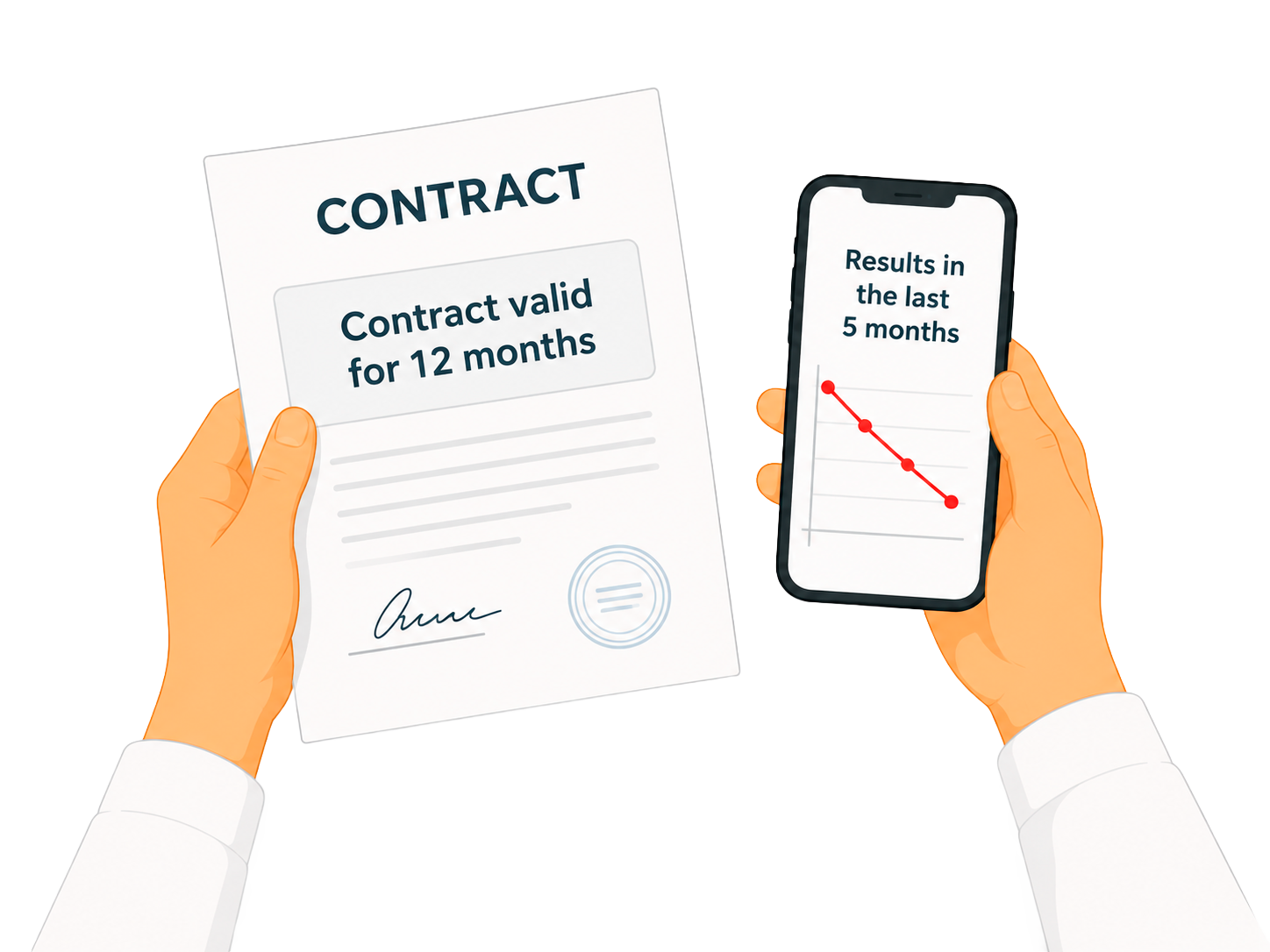
Twelve month agreements are common in this industry.
In most cases, they can be justified. Marketing is not a “get rich quick” scheme.
But here’s the problem: You commit for a year in month one, when you have the least information you will ever have about whether this partnership works.
By month four you know.
By then you may have eight months left to pay.
How to spot issues before you sign: Read the cancellation clause first, before the pricing page. Look for the notice period and any early termination fee.
Also ask who owns what.
Some agencies keep the website, the ad accounts, and the phone number on their own systems, with no buyout options.
Leave, and you leave with nothing.
Questions to ask:
Our programs carry term commitments, but they range between 3 and 12 months based on what types of marketing campaigns you’re investing in.
We tell you which is which before you sign anything, and we provide all of our clients with early termination and buyout options.
3. The Ramp Is Slower Than the Pitch
Marketing is not a switch. It is closer to a hiring decision.
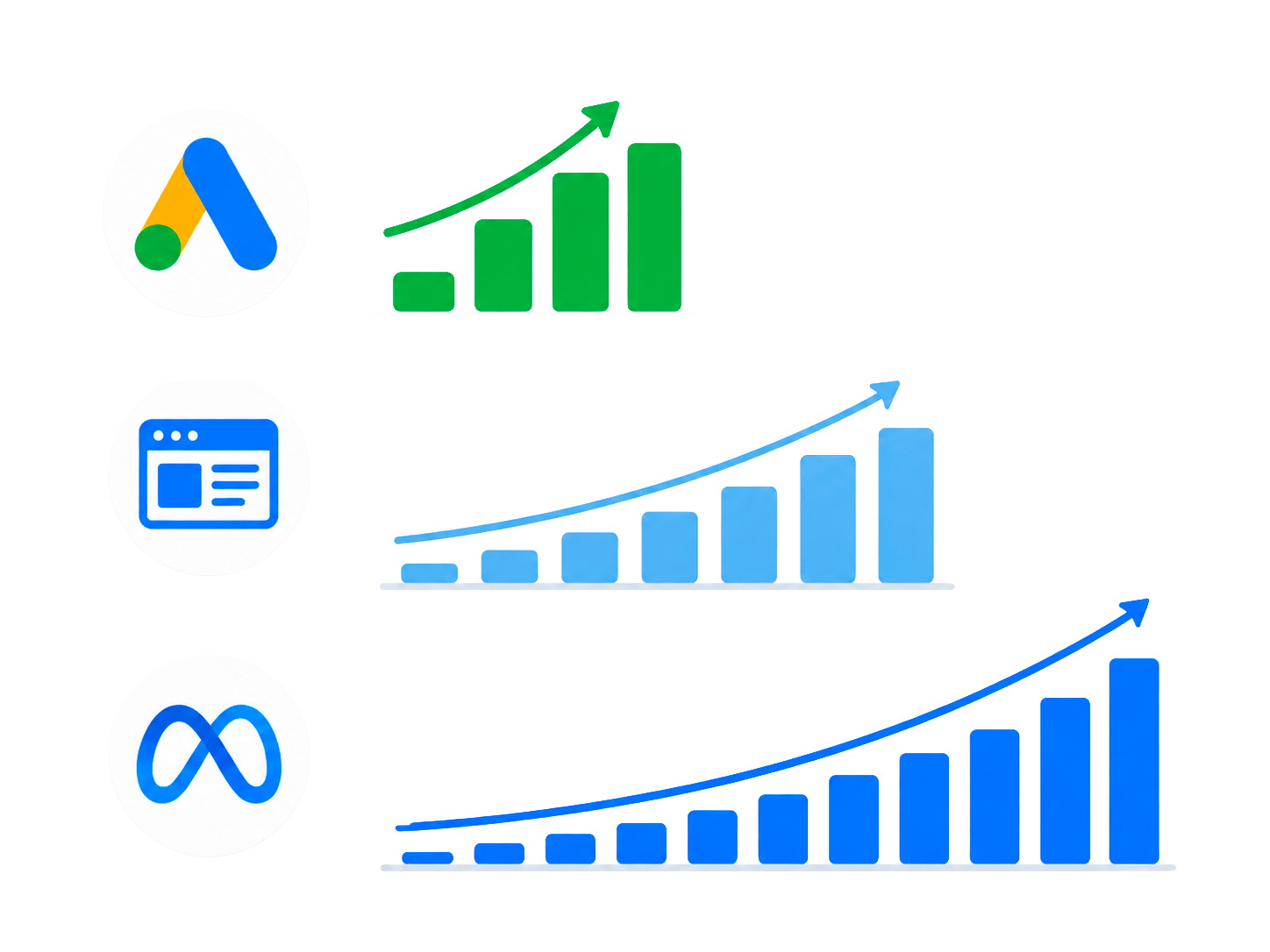
Some channels move fast.
Paid ads can produce qualified leads inside the first 30 days, because you are buying attention that already exists.
Other channels compound.
Search rankings, content, and reputation take months to build, and then they keep paying you after you stop pushing.
The trouble starts when an agency sells you the compounding channel using the fast channel’s timeline.
Here’s the catch: if you cancel in month five, you paid for all of the setup and none of the compounding. That is the worst possible order of operations.
How to spot it before you sign: ask them to separate the timeline by channel. A straight answer sounds different from a hopeful one.
Questions to ask:
4. Most Agencies Are Built to Serve Everyone

Most agencies serve a dozen industries.
A dentist, a law firm, a roofer, and you.
That is a business model, not a character flaw.
Serving everyone means running on templates.
The same website layout, the same ad copy structure, the same monthly report, with your logo dropped in.
Painting does not behave like most local businesses.
An agency that has not seen those patterns defaults to what it knows. Traffic. Impressions. Engagement.
None of those pay a crew.
The channels that actually produce work for a painting contractor are a short, specific list.
We break down how painting leads get generated in plain terms.
How to spot it before you sign: look at their client list.
If painting contractors are one logo among thirty unrelated ones, you are buying a template.
Questions to ask:
5. Communication Depends on Account Load
You sign. Onboarding is great. Everyone is responsive.
Then month three arrives and you cannot get a straight answer about what happened last week.
This is the most common complaint contractors have about agencies.
It is almost never laziness.
It is math.
When one manager carries 35 accounts, the quiet clients get the leftovers.
Reports make it worse.
A twelve page PDF full of impressions and click-through rates can hide a month where nothing meaningful happened.
How to spot it before you sign: ask how many accounts your day-to-day contact handles. Then ask to see a real client report, not a sample built for sales.
Questions to ask:
Silence is a signal.
An agency that cannot explain last month in plain language either did very little or does not understand what it did.
6. Industry Knowledge Is Not Optional
Industry knowledge is not trivia.
It is the difference between spending your money and wasting it.
An agency without it is not lying to you.
It is learning on your budget.
It bids on the wrong search terms.
It writes content for homeowners when you want property managers.
It sends tire-kicker leads and calls them wins.
Google publishes its own advice on hiring outside help, and two warnings in it apply directly here.
No one can promise you the number one spot in search results.
And be careful with any firm that claims a special relationship with Google or offers specific ranking or lead guarantees that sound like:
These guarantees only work because of the fine print.
You can read Google’s full list of questions to ask before your next sales call.
How to spot it before you sign: ask an industry question with a real answer and see if they have one.
Questions to ask:
If they answer with generalities, they are learning your business on your dime.
7. You Still Have to Participate

Here is the reason most contractors never see coming.
Hiring an agency does not remove marketing from your plate. Instead, it changes what stays on it.
You still need photos and videos from your job sites.
You still need someone answering the phone.
You still need to tell your agency which leads turned into paying customers.
Without that feedback, the campaigns get optimized toward the wrong thing.
This is the belief that kills more agency relationships than price ever will: Marketing is not something you can pay to make go away.
There is a second half to this, and it is real.
When you hire an agency, you hand over control.
Someone else holds the ad accounts, sets the priorities, and decides what happens next Tuesday.
That trade is fine when the partnership works.
It is painful when it does not, which is exactly why the ownership questions in reason two matter so much.
How to spot it before you sign: ask what they need from you every month. An honest agency has a specific list.
Questions to ask:
We say this on every strategy call: We do not work FOR you. We work WITH you.
The contractors who grow the fastest, are the ones who show up.
Get the Red Flags Checklist
Everything above turns into one page you can print.
Eighteen red flags, grouped by promises and guarantees, pricing and contract, and fit and communication.
Plus the seven questions worth asking out loud.
Bring it to your next sales call. Use it on us too.
The Bottom Line
Every one of these seven is real. None of them are arguments against hiring an agency.
They are the terms of the deal.
The contractors who get burned are rarely the ones who picked a bad agency.
They are the ones who never asked what it would cost, how long it would take, or what they would have to do themselves.
The contractors who win treat it like hiring a key employee.
Same seven reasons. Completely different outcome.
The bottom line: you do not need a marketing partner who tells you everything will be easy. You need one who tells you the truth about the parts that are hard, and then does the work anyway.
Find Out Where You Actually Stand
Before you hire anybody, find out what your marketing looks like right now.
Our Growth Audit shows how your painting or coating business shows up in search and in AI answers.
It also shows you where you sit against the other contractors in your market.
It takes a few minutes and there is no sales call attached to it.
Then use the checklist. On us, or on whoever you talk to next.
Resources
- Google Search Central: Read the full list of questions to ask before hiring an SEO.