If you run a painting or coating business, you have probably felt it.
Someone in your area searches for a painter, and a competitor shows up first. Not you.
Maybe your phone used to ring on its own. Now the good leads cost more, and there are fewer of them.
Here is the good news. The contractors who win the top spots on Google are rarely the biggest. They are the ones who set their website up the right way and keep it current.
Google changes how it ranks websites almost every day. What put you on page one last year can quietly stop working this year.
That is why so many painting contractors slip without knowing why.
This article walks through what actually moves the needle right now.
You will learn how to find the terms your customers type, how to win the local map results, how to show up in AI answers (now called Answer Engine Optimization, or AEO), and how to turn all of it into steady leads.
We work with painting and concrete coating contractors every day, residential and commercial, so the steps below are built for your trade, not generic small business advice.
Let’s get into it…
What SEO Really Means for a Painting Contractor
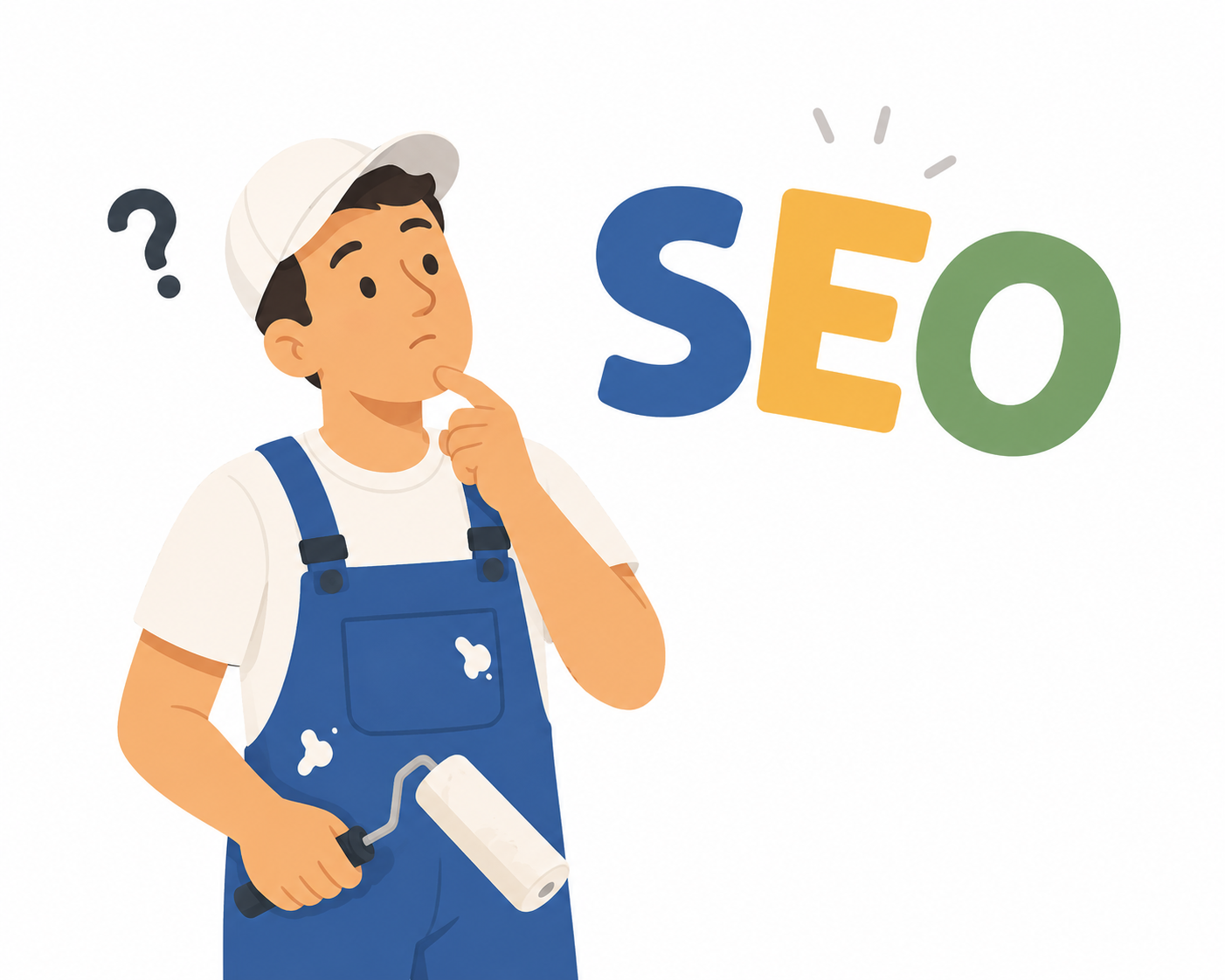
SEO stands for search engine optimization.
In plain terms, it is the work you do to help your website show up when someone searches for a painter or coating contractor in your area.
The goal is simple. When a homeowner or property manager searches, you want to be one of the first names they see.
Most of your customers search locally.
They want someone close, not a national brand three states away.
That is why local SEO matters so much for your trade.
You are not trying to beat every painter in the country. You are trying to win your service area.
Here’s the thing: A national franchise may have a huge website, but it cannot speak to your town the way you can. Local relevance is something you can win, even against bigger names.
And it pays off. Most of the people who find you this way cost you nothing in ad spend, unlike paid leads that stop the moment you stop paying.
SEO Is Becoming AEO (Answer Engine Optimization)
The biggest shift in search is not a new Google update. It is how people ask in the first place.
For years, you typed a few words and scanned a page of blue links.
Now more buyers ask a full question and expect one clear answer back.
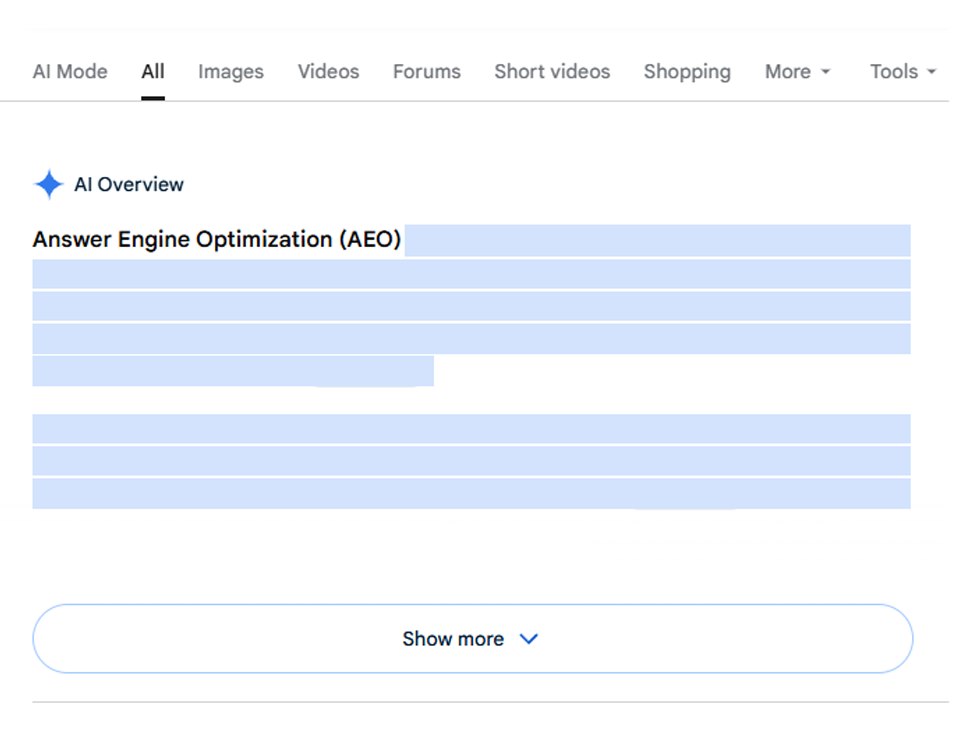
They ask ChatGPT. They ask Gemini. They read Google’s AI Overview at the top of the page and never scroll.
That shift has a name. Answer Engine Optimization, or AEO.
Here’s the thing: SEO works to get you found in a list of results. AEO works to get you named in the one answer the tool hands back.
Here is the part that should reassure you. AEO is not a second job stacked on top of SEO.
It runs on the same foundation: clear answers to real questions, consistent business information, and honest reviews.
The difference is the target. With SEO, you want to rank. With AEO, you want to be the source an answer engine quotes when a homeowner asks for “the best cabinet painter in [city].”
This is not a far-off trend. Adoption has moved fast over the past year, and we cover the numbers further down.
The contractors who build for AEO now will be the default answer in their market while their competitors are still fighting over position four on Google.
Step 1: Find the Words Your Customers Search

Before you change a single page, you need a plan. That plan starts with keyword research.
A keyword is simply a word or phrase people type into Google.
Think “house painters near me” or “commercial painting contractor in [city].”
Picking the right keywords is like placing a billboard.
You want it on a busy road, not an empty one.
Some terms get searched a lot. Some barely at all.
And the most searched terms are usually the hardest to rank for, because everyone wants them.
Look for a mix:
Here is a simple trick. Write down every question you get asked on estimates.
Each one is a keyword and a future page.
One more point that trips people up. Small terms feed big ones.
Ranking for “front door painting” can help your site climb for harder terms like “house painter near me” over time.
Step 2: Build Pages Google Can Read

Once you have your list, build a page for each main service and each area you serve.
Google ranks pages, not whole websites.
So each page should focus on one or two main terms, like a chapter in a book.
A few simple rules make a page easy to read:
Create a separate page for each service you offer.
Interior painting, exterior painting, cabinet refinishing, and concrete coatings each deserve their own page.
Do the same for the towns you serve.
A page for each city helps you show up in places where your shop is not physically located.
One warning. Do not stuff the same keyword over and over.
If the writing feels stiff or repetitive, Google notices, and so do your customers.
Step 3: Write Blog Posts That Answer Real Questions

Service and location pages bring in people ready to buy. Blog posts bring in people who are still researching. Both matter.
The blog is where you answer the questions you hear all day.
Say you get asked what it costs to repaint a kitchen in your area. If customers are asking you, they are asking Google too.
Write a post that answers it honestly. A title like “How much does it cost to paint a kitchen in [city]?” can pull in people who later become paying jobs.
This is the heart of the approach we teach, and the same idea behind the Endless Customers method: answer your buyers’ real questions better than anyone else in your market. It is also the core of AEO, since a clear answer is exactly what an answer engine wants to quote.
Win the Google Map Pack
Here’s the catch: Even a great website is only half the game in local search.
When someone searches for a painter, Google often shows a map with three businesses at the top.
That box is called the local map pack, and it sits above the regular results.
For local searches, that map pack gets a large share of the clicks.
If you are not in it, you are missing the most valuable space on the page.
The map pack is powered by your Google Business Profile, the free listing that shows your name, reviews, hours, and photos.
Most contractors claim the profile and stop there.
The ones who win keep it active.
Here is what that looks like:
That last point matters more every year.
Reviews are now one of the strongest trust signals a customer sees before they ever call you.
Reviews Build Trust and Rankings
Reviews do two jobs at once.
They help you rank in the map pack, and they convince nervous buyers to choose you.
The numbers back this up. By BrightLocal’s most recent consumer research, the large majority of people read reviews before picking a local business, and a growing share now read them every single time.
Buyers also watch how you respond. BrightLocal found that far more people will use a business that replies to all of its reviews than one that ignores them.
So ask every happy customer for a review.
Make it easy with a direct link by text or email.
Then reply to all of them, good and bad.
A calm, professional reply to a hard review can win more trust than a perfect five-star rating.
Build Authority With Backlinks
A backlink is a link from another website to yours.
Google treats each one like a vote of confidence.
Not all votes count the same.
One link from a respected local source beats a hundred from spammy sites.
When you judge a backlink, look at three things:
Earning links takes real effort. A few honest ways to start:
One caution. Cheap, mass-produced links can get your site penalized and pushed down.
Slow and real beats fast and risky every time.
The Technical Side: Speed, Mobile, and Experience
Google also judges how your website feels to use.
A slow, clunky site can sink even great content.
You do not need to be a developer.
You do need to cover the basics Google asks for (see Google Search Essentials):
The visitor experience matters just as much. People should find what they need in seconds.
Make it easy:
When your site answers questions fast and makes contact simple, more visitors turn into booked estimates.
When it frustrates them, they leave, and Google takes note.
Commercial vs. Residential SEO Are Not the Same

Here’s the thing: Commercial and residential customers do not search the same way. If you serve both, your SEO has to speak to both.
Residential buyers are usually homeowners.
They search on their phones, often with “near me,” and they decide fast.
They care about trust, clean work, and a fair price.
So residential pages should be simple, local, and full of real job photos and reviews.
Commercial buyers are different. They include:
They search for terms like “commercial painting contractor” or “industrial coating services.”
Their decisions take longer and involve bids, references, and timelines.
They want proof you can handle the size of the job and stay out of their tenants’ way.
So commercial pages should speak to project scale, safety, low-disruption scheduling, and past commercial work.
Concrete coating contractors should call out specific systems and the spaces they serve, like warehouses, parking decks, and food plants.
You can rank for both.
You just need separate pages built for each buyer, instead of one page trying to do everything.
Show Up in AI Answers, Not Just Google

Search is changing fast.
More people now ask AI tools like ChatGPT, Google’s AI Overviews, and Gemini to recommend a local painter.
This is not a small trend.
By BrightLocal’s latest research, the share of consumers using AI tools to find local businesses jumped from single digits to nearly half in about a year.
Here is what that means for you.
The same work that helps you rank on Google also helps AI tools find and recommend you. That overlap is the whole idea behind AEO.
AI tools pull from clear, helpful content, strong reviews, and a consistent business profile.
They favor sites that answer real questions in plain language.
A few AEO moves help you show up in these answers:
The contractors who set this up now will own these answers while their competitors are still figuring it out.
What Results to Expect, and When
Let’s be honest about timing. SEO is not a switch you flip.
It is an asset you build.
Most painting contractors start to see movement in three to six months.
Bigger gains, like ranking for your toughest local terms, often take six to twelve months of steady work.
That sounds slow next to paid ads.
But the math works in your favor over time.
Paid leads stop the day you stop paying.
Organic rankings keep sending you leads month after month, at a lower cost per lead once they take hold.
Here’s the catch: Results depend on doing the work consistently. One burst of effort fades. Steady content, fresh reviews, and an active profile compound.
The good news is that most of your competitors quit early or never start. Patience here is a real edge.
SEO Mistakes Painting Contractors Make

A few common mistakes hold good contractors back. Avoid these and you are ahead of most of your market.
Don’t Get Left Behind

The painting and coating contractors who treat their website like a real asset are pulling ahead.
The ones who ignore it keep paying more for fewer leads.
You do not have to figure all of this out alone.
The steps above work, but they take time most owners do not have between estimates and crews.
That is where a partner helps.
Base Coat Marketing works only with painting and concrete coating contractors, residential and commercial.
We know your customers, your seasons, and your numbers.
If you want to see where you stand and what to fix first, we are glad to take a look with no pressure.
The bottom line: Every month you wait, a competitor is earning the rankings that could have been yours. The best time to start was last year. The second best time is now.
Frequently Asked Questions