You signed the contract. You wrote the check.
Now you’re sixty days in and the phone sounds exactly like it did before.
So you start running the math in your head.
How much longer do I give this thing?
Nobody gave you a real answer up front.
You got told to be patient, but patience doesn’t pay the bills.
And how to tell the difference between a failing marketing agency, and a plan that is simply still cooking.
There are two different forms of marketing working on different timelines:
That long-term work provides the foundation, but it takes time.
Let’s get into it…
The Short Answer: A Timeline by Channel
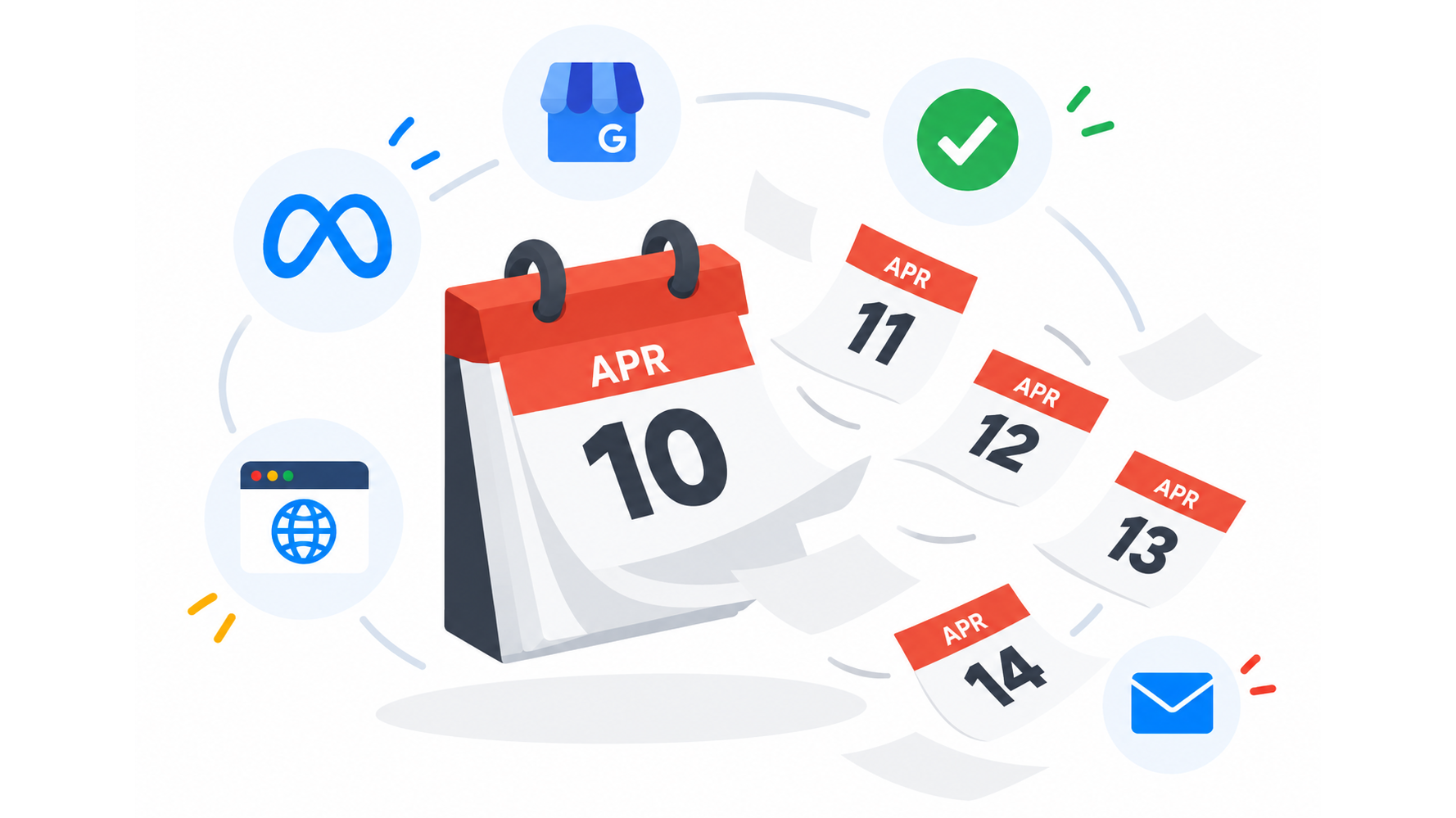
Two columns matter here, and most contractors only think about one.
Time to launch is how long before the thing is live.
Time to trust the data is how long before the numbers mean anything at all.
| Channel | Time to launch | First leads | Time to trust the data |
|---|---|---|---|
| Google Local Services Ads | 1 to 3 weeks (background check, license and insurance verification) | Potentially 3 to 10 days after approval, depending on reviews and buyer demand | 45 to 60 days |
| Google Search Ads (PPC) | 1 to 2 weeks | 3 to 14 days | 90 days |
| Meta Ads (Facebook and Instagram) | 1 to 2 weeks | 7 to 21 days | 60 to 90 days |
| Google Business Profile (local SEO) | 1 to 2 weeks to claim and verify, days if already live | 2 to 6 weeks | 90 days |
| Website SEO and AEO | 30 to 60 days | 90 to 120 days | 6 to 12 months |
| Email and database reactivation | 2 to 4 weeks | 7 to 30 days | 60 days |
Here’s the catch: those numbers assume three things are true.
You funded the channel above its minimum.
You sent photos and video when asked.
And nobody rewrote the strategy halfway through.
Break any one of those and leads can slow down.
That is just how these platforms work.
The Real Villain: Treating Marketing Like a Get-Rich-Quick Scheme
Marketing is not a get-rich-quick scheme.
Treat it more like investing in the stock market than expecting to put in one dollar today and pull out ten dollars tomorrow.
Marketing is not a purchase.
It is a position you build and then defend.
Here’s the thing: every channel has a warm-up period where you are paying to teach the platform who your customer is.
During that window you are buying information, not jobs.
That feels awful. It is also unavoidable.
The contractors who quit at day 45 pay full price for the education and collect none of the return.
Google Local Services Ads (Short-Term): Fast, But Only If You Have Reviews
LSAs can be one of the quickest paths to a ringing phone once you have the review foundation to compete.
They are not the quickest path to a live ad.
- 1Google runs a background check and verifies your license and insurance first.
- 2That takes one to three weeks before you appear anywhere.
- 3Once you are live, leads can start inside ten days.
But if you do not have a solid review foundation, you may not see results until review capture starts building that profile.
But your volume is controlled by more than budget.
Your review count, how fast you answer the phone, and buyer demand all matter.
Missed calls can hurt LSA performance and may reduce the number of leads you receive.
Spend more and it barely moves the needle.
LSAs are a low-volume channel.
Cost per lead and lead quality can be strong, but volume fluctuates with buyer demand throughout the year.
Even a contractor with hundreds more reviews than the next competitor may receive only a couple of leads in a slow month like November.
In stronger periods, we generally see clients spend about $500 to $1,000 a month in the best case, which can mean roughly 20 leads.
Volume is not the main asset of this channel, but it is still something you should have up and running.
Give it 45 to 60 days before you judge cost per lead.
Anything shorter is a sample size, not a trend.
Google Search Ads (Short-Term): Fast Clicks, Slow Truth
Google is where you are paying for today’s lead today because you are paying for buyer intent.
Paid search delivers clicks in days. It delivers a reliable cost per booked job in about 90 days.
The gap between those two is the learning period.
Google is testing which searches turn into phone calls for your service area and your price point. Early data can mislead.
Your first two weeks might show a $38 cost per lead or a $310 cost per lead. Neither number means much yet.
Here’s what most contractors miss: paid search usually gets killed at day 30, right before the system figures them out.
Then they restart in spring and pay for the exact same learning period a second time.
Treat the first 90 days as an investment.
If you cannot fund 90 days, put that money somewhere else.
Meta Ads (Short-Term): Cheap Attention, Expensive Patience
Meta is not a search channel. Nobody on Facebook woke up looking for a painter.
That is the whole difference.
You are interrupting people instead of answering them.
That is interest on social media versus intent on Google.
With paid social, you are paying for tomorrow’s lead today: someone may raise their hand now and not close for a week or two, or even a month or two.
So the ad has to do the work a search query normally does. It has to create the want.
One ad set with two images will not get there.
Meta needs options to test against each other.
Expect first leads inside three weeks.
Expect a settled cost per booked job between 60 and 90 days.
The failure mode here is lead quality, not lead count.
Meta will hand you plenty of names and some of them are tire kickers.
So judge it on booked jobs.
A channel that delivers 60 cheap leads and books three is losing to one that delivers 15 and books six.
Google Business Profile (Long-Term): The Fast Half of Organic
Google Business Profile is part of long-term marketing because it builds your organic foundation and brand visibility over time.
Most painters hear SEO and picture blog posts.
That is the slow half.
The fast half is your Google Business Profile and the map pack.
Google is not only grading your website here.
It is weighing how close you are, how relevant your categories are, and how prominent you look.
Categories, services, and profile structure are setup work.
Done properly once, in the first two weeks, and then left alone.
Prominence is the part that never stops. And prominence mostly means reviews.
Here’s the part nobody mentions: review momentum matters.
A profile earning three new reviews a week could outrank one sitting on 140 from two years ago.
Go weeks with no new review and the map pack could start to slide.
That is what makes this channel fast to start and easy to stall.
It depends on your crews asking at the end of the job, and on someone actually following up.
That is the one input nobody can hand off.
If the profile is already claimed and live, edits show up in days.
If it needs claiming or reverification, budget one to two weeks first.
Website SEO and AEO (Long-Term): The Slowest and the Most Durable

Google’s own documentation says most search optimization work takes four months to a year before you see the benefit.
That is Google talking about Google.
Search compounds, and compounding needs runway.
Also expect that same content to still be producing leads in year three, long after you stopped paying to create it.
AEO stands for Answer Engine Optimization.
It is how you show up when a homeowner asks ChatGPT for a painter instead of typing into Google.
Like Google search, AI is an intent-based channel, but its growth follows more of the long-term organic strategy.
AEO does not have a clock of its own. It borrows the two you already have.
The profile and review half moves on your map pack timeline. Four to six weeks.
AI tools lean on the same signals the map pack does.
The content half is slower, and it sits downstream.
These tools mostly name businesses that already look established in ordinary search results.
If you are optimizing the web side well for SEO, that same foundation should also support how the business appears through AEO.
So the order is profile and reviews first, then content.
Not because content does not matter, but because it lands harder once the rest is in place.
There is no specific ranking report for AI answers.
You cannot open a dashboard and see position four.
You check it by asking the tools what your buyers ask, and seeing whether your name comes up.
Do that once a month and write down the answer.
After three months you have a trend instead of a feeling.
Nobody has a published benchmark for how fast this moves.
Anyone who quotes you one is guessing.
What Speeds It Up and What Kills It
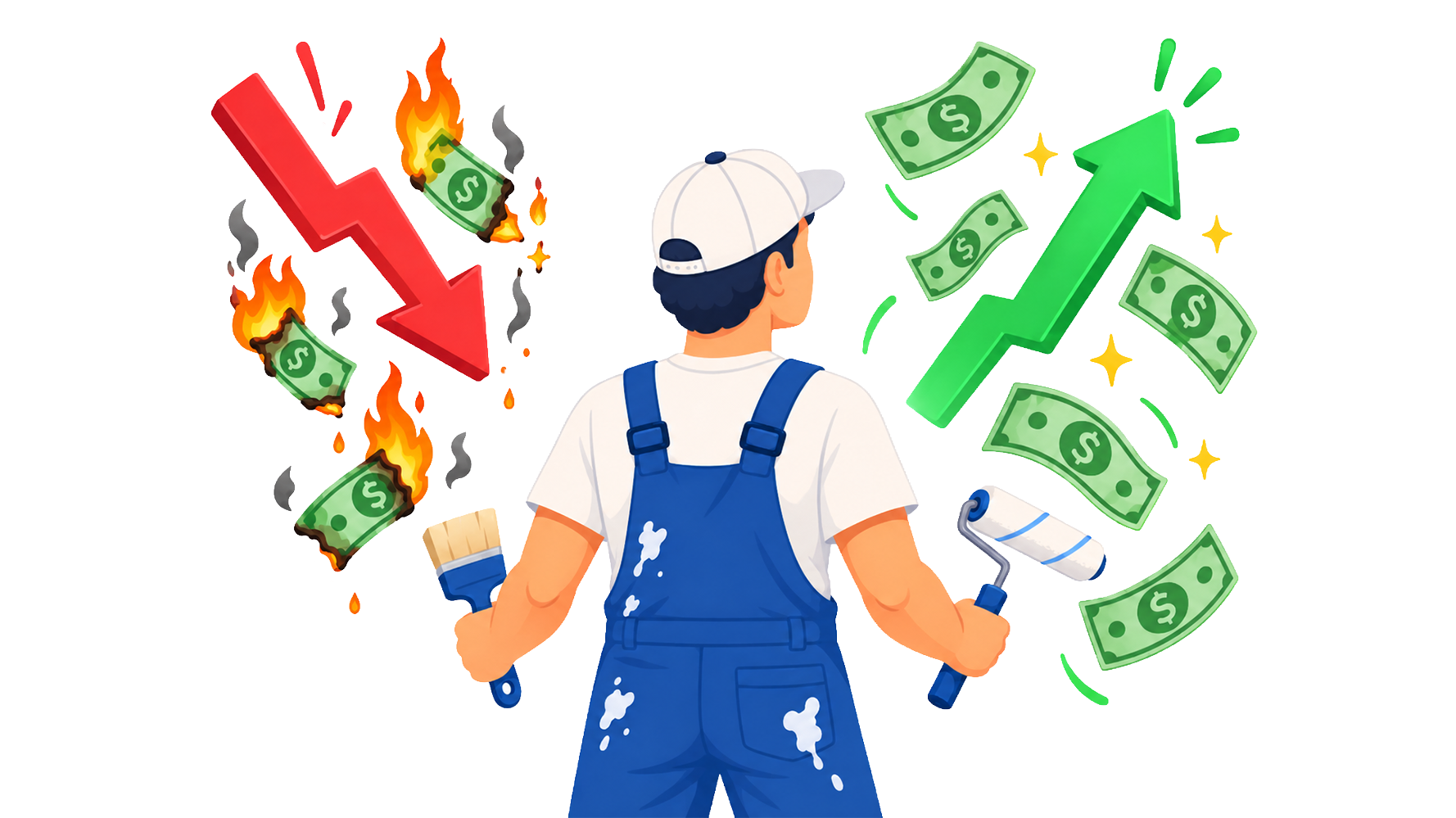
Three things shorten every timeline in that table.
Three things kill every timeline.
When to Fire Your Agency, and When You Are Just Impatient
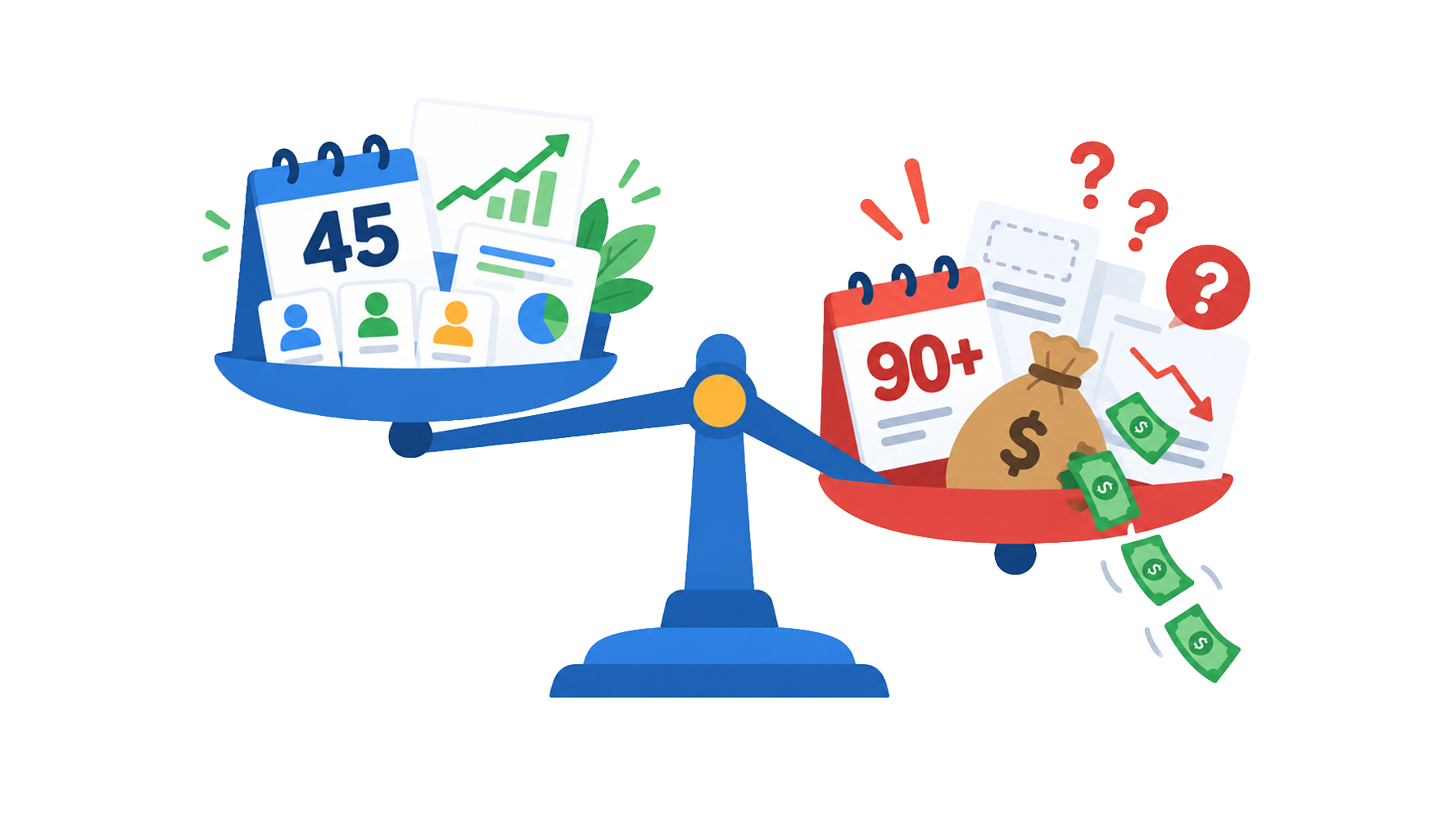
Both happen.
Telling them apart is the whole ballgame.
Now the other side.
Here’s the difference: a good partner tells you the timeline before you sign, then reports against it whether the news is good or bad.
The Bottom Line
Here’s the split: short-term channels buy you cash flow. Long-term marketing buys you a business that does not panic every February.
You need both.
Local Services Ads and paid search keep crews busy this quarter.
Search, AEO, and your customer database make next year cheaper.
The contractors who grow are the ones who fund both, stay involved, and hold the line through the ugly part in the middle.
Whether you paint homes, paint commercial buildings, or install concrete coatings, the ramp works the same way.
The only real variable is whether you stay in long enough to reach it.
Ready to Find Out Where You Actually Stand?
You do not need another promise.
You need to know which of your channels are still learning and which ones are simply broken.
Base Coat Marketing works with residential painting contractors, commercial painting contractors, and concrete coating contractors across the US and Canada.
We will show you the timeline you should be on, and tell you honestly whether you are on it.